
One participant uses AI to find clearer wording. Another asks the same tool to propose the entire argument. Both say they used it for support. If an assignment simply permits AI as a helper, the boundary remains unclear.
We use a fictional course example: participants compare two approaches to organising a project and justify their choice. As a teacher, first decide what they must do themselves. You can then specify where tools are allowed. This example describes a possible teaching approach; it does not come from an ExtraProof pilot that has taken place.
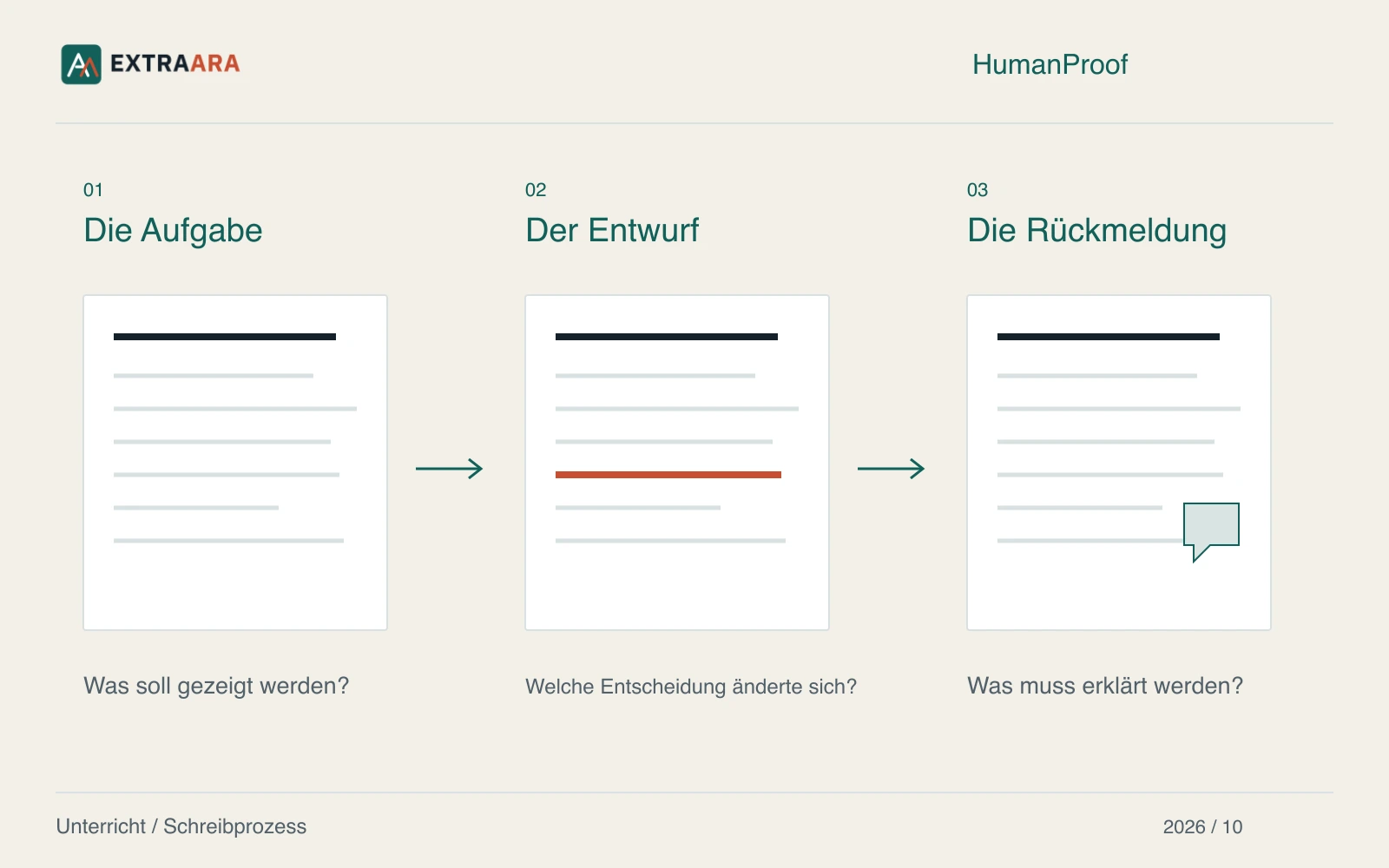
Name the decision someone must be able to explain
In our project assignment, participants must explain why a particular organisational approach better fits the chosen situation. A polished final text is not enough. Ask for the reasoning behind a central decision in the assignment itself. Your feedback can start there: what led you to that choice?
The current work area AI and assessment at Umeå University addresses reflection and feedback among other topics. The course assignment in this article is our own example.
Write a rule two people can understand in the same way
“AI may be used for support” can mean revising your own sentence. It can also mean having the tool write the analysis. In our course example, the boundaries can be explained through these two activities:
- Language revision: you may ask for wording suggestions for a text you wrote yourself.
- Subject analysis: you develop the comparison and justification of your choice yourself. You may not submit generated analysis as your own.
Ask participants to describe their use through a concrete example: “I adopted a wording suggestion in this paragraph and then corrected the technical term.” A general statement such as “AI was used” says too little about that working step.
This is an example rule for this assignment. The guide from Mid Sweden University includes examples of assignment-specific AI instructions. The rules and permitted tools of the actual course remain decisive.
Request material you actually intend to read
A folder full of drafts and screenshots takes time. First ask what you want to learn from it. For the project task in this example, request:
- The finished comparison with source references.
- A draft from the stage when comparison criteria were set.
- A short explanation of a changed decision and what prompted it.
- The AI-use declaration required by the assignment.
Read the explanation alongside the text. If someone says a source changed their decision, ask which statement in it was decisive. This creates a subject-specific question that can be discussed.
An interruption first needs an explanation
Some people begin on paper, use an input aid or edit notes in another app. Plan how they can describe that work. Pasted text may come from their own notes. A pause alone says nothing about what happened outside the recorded session.
If technical recording is part of a voluntary trial, an equivalent path without participation is needed. Establish whom participants can contact if installation or recording fails. These situations should be covered in the assignment before submission day.
Decide what you want to check with ExtraProof
With ExtraProof, writers can share a Creation Record for the observed session. Recipients can check its integrity and, where a file binding exists, compare it with the submitted file. Our earlier article explains the information a record contains. This can help establish which document version the information refers to or which parts of a session were recorded. The record does not decide who conceived an argument, whether someone understood the subject or whether AI was used outside the observed workflow.
Start a course trial with a specific question: does the record help discuss a change in a draft? Also note how long verification actually takes. Afterwards, ask participants whether they understood what information they were sharing. Include this feedback in the evaluation. If a draft and conversation already suffice, additional recording may be unnecessary for this task.